


 X
X
Chlamydia comparison to Gonorrhea, BV, Yeast infection, and UTI.
In this article we will compare chlamydia to other common genital conditions with similar sign and symptoms: gonorrhea, BV, yeast infection, and UTI. The most significant differentiating sign and symptoms will be noted.
The comparison will be in two parts:
1. History of symptoms
- What caused the symptoms?
- How soon did they appear after exposure (that is, how long was the incubation period)?
- How are the symptoms changing over time?
2. Visual exam
- Discharge and its characteristics (color, amount, and consistency)
- Genital area
Disclaimer: Although the information in this article may help differentiate chlamydia from similar conditions, the definitive diagnosis can be established only after proper testing (a swab or urine test).

By Slava Fuzayloff | Published on June 05, 2023

PART 1
Chlamydia vs. vaginal yeast infection
History of the symptoms
What preceded the appearance of the symptoms?
Both conditions can be caused by sexual activity. Chlamydia typically occurs only with unprotected contact, [1] Chlamydia trachomatis https://www.mayoclinic.org/diseases-conditions/chlamydia/symptoms-causes/syc-20355349 unlike yeast infection.
Yeast infection, unlike chlamydia, can be caused many things other than sexual activity. Anything that changes the pH of the vagina can cause the fungal overgrowth of yeast infection, including recent antibiotic use, recent use of birth control pills with a high estrogen level, diabetes, and pregnancy.
How soon after exposure did the symptoms appear?
This is a major differentiating factor. Yeast infection appears within a day or two after the inducing event; chlamydia takes 2–3 weeks to appear.
How are the symptoms changing over time?
Vaginal yeast infection begins as an itch and redness of the vaginal opening that might progress, causing swelling and abundant white discharge. [10] Thrush in men and women https://www.nhs.uk/conditions/thrush-in-men-and-women/
Unlike yeast infection, chlamydia involves minimal itching and discharge. But chlamydia infection, if left untreated, can lead to painful intercourse, bleeding with sexual activity and between periods, or even pelvic inflammatory disease (PID), which can cause lower abdominal pain and infertility.

What can be seen during a visual exam?
Discharge color and amount
✓ Chlamydia discharge is whitish or colorless and scanty. It can be foul smelling. [4] Symptoms Chlamydia https://www.nhs.uk/conditions/chlamydia/symptoms/
✓ Vaginal yeast infection discharge is whitish and abundant and has the texture of cottage cheese. It too can be foul smelling.
[9, 11]
Vaginal Candidiasis
https://www.cdc.gov/fungal/diseases/candidiasis/genital/index.html
Yeast infection (vaginal)
https://www.mayoclinic.org/diseases-conditions/yeast-infection/symptoms-causes/syc-20378999
Discharge color and amount
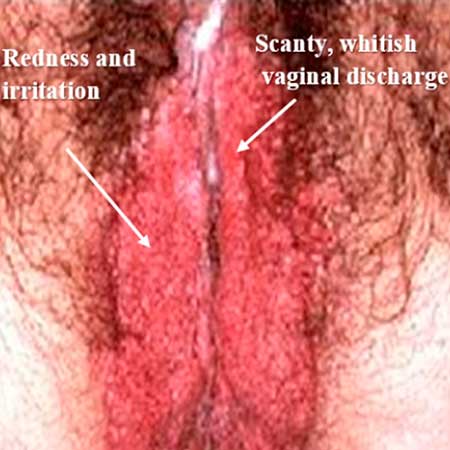
✓ Yeast infection is also called vaginitis (the suffix “itis” means infection). Unlike chlamydia, it can cause irritation, redness, and swelling of the vaginal opening.
✓ Chlamydia infection is also called cervicitis (it affects the cervix, which is the deeper part of the vagina), so usually there is no visible redness, or if there is, it is minimal.
This picture shows the differences between chlamydia and yeast infection.
Warning
Contains sensitive content
View Gallery 5
 Chlamydia
 Yeast infection
 Beginning of Yeast infection
 Yeast infection discharge


PART 2
Chlamydia vs. vaginal BV (bacterial vaginosis)
History of the symptoms
What preceded appearance of the symptoms?
Unlike BV, chlamydia is considered a sexually transmitted disease and is acquired only through unprotected sex (oral receiving or genital).
BV is caused by a vaginal pH imbalance, which can result from sexual activity and other non-sex-related events, including douching, recent use of antibiotics, using an IUD, and pregnancy.
However, sexual activity is the more common cause of BV, especially with new partner and condomless sex (it’s unclear why this is so). BV is more likely to be contracted through oral sex than genital contact, which is why it is more common among homosexual females. [12] Bacterial vaginosis https://www.nhs.uk/conditions/bacterial-vaginosis/
How soon did symptoms appear?
This is a significant differentiating factor. The average incubation period for BV is about 4 days; for chlamydia, it is 2 weeks.
[2, 14]
Chlamydia – CDC Basic Fact Sheet
https://www.cdc.gov/std/chlamydia/stdfact-chlamydia.htm
Bacterial Vaginosis – CDC Basic Fact Sheet
https://www.cdc.gov/std/bv/stdfact-bacterial-vaginosis.htm
How are the symptoms changing over time?
Unlike chlamydia (which affects the cervix, deep in the body), BV affects the outer portion of the vagina, and for that reason produces more obvious vaginitis symptoms: itch around the vaginal opening, redness, and burning. It begins as a mild itch with clear, foul-smelling discharge. If left untreated, the itch intensifies and redness and swelling (of the vulva and vagina) worsen.
Cervicitis (chlamydia) causes fewer vaginal symptoms. It can start with minimal vaginal discharge or urinary symptoms (burning with urination, urgency, and frequent urination). Occasionally, the only symptom is bleeding between periods and with sexual activity.
Prolonged, untreated chlamydia can result in abdominal pain and can progress to PID.

What can be observed during a visual exam?
Discharge
BV produces a moderate amount of thin, whitish discharge, whereas chlamydia causes a transparent, scanty discharge.
[3, 13]
Chlamydia – CDC Detailed Fact Sheet
https://www.cdc.gov/std/chlamydia/stdfact-chlamydia-detailed.htm
Bacterial vaginosis
https://www.mayoclinic.org/diseases-conditions/bacterial-vaginosis/symptoms-causes/syc-20352279
Smell
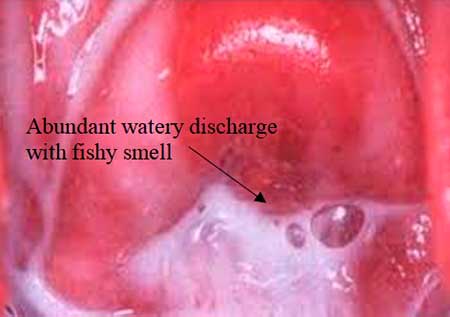
Any vaginal discharge can be smelly, but certain conditions are well known to have a specific smell. BV is one of them; it has a fishy-smelling discharge. This odor is the result of the altered pH level in the vagina caused by the interaction between healthy vaginal bacteria and unhealthy bacteria.
Chlamydia discharge also can occasionally have a foul smell.
Genital examination
Unlike chlamydia, BV (if left untreated) causes significant redness and swelling of the vaginal opening.
This picture shows the differences between chlamydia and bacterial vaginosis.
Warning
Contains sensitive content
View Gallery 4
 Bacterial vaginosis
 Bacterial Vaginosis discharge
 Bacterial vaginosis discharge

PART 3
Chlamydia vs. gonorrhea
Chlamydia and gonorrhea can both affect various body areas: the oral cavity, eyes, rectum, urethra, and vagina. The focus of this article is chlamydia and gonorrhea that affect the urethra or/and vagina (genital chlamydia and genital gonorrhea).
The symptoms and presentation of these two conditions can be very similar.
Chlamydia and gonorrhea often coexist (24% of males and 38% of females with gonorrhea are chlamydia-positive), which results in symptom overlap.
[5, 15]
Prevalence of Chlamydia trachomatis genital infection among persons aged 14-39 years--United States, 2007-2012
https://pubmed.ncbi.nlm.nih.gov/25254560/
Gonorrhea – CDC Detailed Fact Sheet
https://www.cdc.gov/std/gonorrhea/stdfact-gonorrhea-detailed.htm
History of symptoms
What preceded the appearance of symptoms?
Both conditions are sexually transmitted and can be caused by unprotected insertive vaginal and receiving oral sex. For the infection to incur, the vaginal and urethral mucosa need to be exposed to an infected partner’s bodily fluids, such as saliva, vaginal fluid, urethral fluid, or semen.
Incubation period
The incubation period for gonorrhea is much shorter than that of chlamydia, which means gonorrhea symptoms appear much sooner after exposure. On average, gonorrhea symptoms appear within a week and chlamydia symptoms appear within 2 weeks.
[4, 17]
Symptoms Chlamydia
https://www.nhs.uk/conditions/chlamydia/symptoms/
Gonorrhea – CDC Basic Fact Sheet
https://www.cdc.gov/std/gonorrhea/stdfact-gonorrhea.htm
How are the symptoms changing over time?
The progression of these diseases—regardless of the area of the body affected—is very similar.
When the vaginal area is affected
Both conditions can begin as minimal vaginal itch and vaginal discharge. With gonorrhea, the discharge is usually more significant.
Unlike gonorrhea, chlamydia can cause vaginal pain with sex as well as vaginal bleeding between periods and with sex. [18] Symptoms Gonorrhoea https://www.nhs.uk/conditions/gonorrhoea/symptoms/
Chlamydia is more likely to progress to pelvic inflammatory disease (PID) than gonorrhea.
When the urethral area is affected
The urethral area becomes infected more often in males than in females.
Both chlamydia and gonorrhea can begin with urinary symptoms of burning, urgency, and increased frequency. Urinary symptoms may progress to a urethral discharge, which is more common and more significant with gonorrhea.
In males, urethral infection can progress to epididymitis (testicular infection).

What can be seen during a visual exam?
Discharge
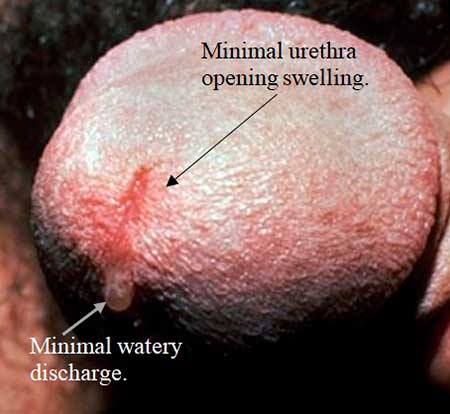
✓ Chlamydia, unlike gonorrhea, causes a watery, transparent discharge. The amount of discharge is minimal, and sometimes the urethra must be squeezed for the discharge to be visible.
✓ Gonorrhea discharge is greenish, thick, and abundant (dripping).
✓ Chlamydia discharge, unlike gonorrhea discharge, can have a foul smell.
Genital area
Both chlamydia and gonorrhea can cause redness and swelling of the affected areas:
✓ Tip of the urethra
✓ Vagina opening
The degree of swelling is usually more significant with gonorrhea, but this depends on the disease progression either condition. [19] Overview Gonorrhoea https://www.nhs.uk/conditions/gonorrhoea/
This picture shows the differences between chlamydia and gonorrhea.
Warning
Contains sensitive content
View Gallery 5
 Chlamydia
 Gonorrhea
 Gonorrhea discharge
 Chlamydia discharge


PART 4
Chlamydia vs. UTI (bladder infection)
Bladder infection, or UTI, is a common medical condition affecting mostly females. It is caused from an infection being pushed into the bladder through the urethral opening. Males rarely get UTI because they have a longer urethra.
History of symptoms
What preceded the appearance of symptoms?
Unlike chlamydia, which is transmitted only via unprotected sex, UTI can be caused by sex (both protected and unprotected) and other things [22] Urinary tract infection https://www.cdc.gov/antibiotic-use/uti.html :
✓ A structural (anatomic) problem that make someone predisposed to it.
✓ A change in vaginal flora
✓ Being older
✓ Poor hygiene
How soon did symptoms appear?
Unlike chlamydia, which has an average incubation period of two weeks, UTI symptoms can appear as early as the day after exposure. Some UTIs, however, can take 3–8 days to become apparent.
How are symptoms changing over time?
Both conditions can start as burning, urgency, and increased frequency of urination. However, there are differences:
✓ UTI symptoms (especially burning in the urethra with urination) are usually more significant and progress quickly (in 2–5 days) to lower abdominal pain. Bloody urine is not uncommon. Untreated UTI can progress to kidney infection that causes mid-back pain, fever, and chills. [23] Urinary tract infections (UTIs) https://www.nhs.uk/conditions/urinary-tract-infections-utis/
✓ Chlamydia’s urinary symptoms are usually milder, and the disease takes time to progress.
✓ In addition to urinary symptoms, chlamydia can cause vaginal discharge. It takes time to appear (2 weeks on average).
✓ Untreated chlamydia can cause spotting between periods, bleeding with sexual activity, and lower abdominal pain, and it can progress to pelvic inflammatory disease (PID) or, in males, epididymitis (infection of the tube at the back of the testicles) in males. It usually takes a few weeks for complications to occur.
What can be seen during a visual exam?
Urine
Unlike chlamydia, UTI can cause cloudy, strong-smelling, and bloody urine.
Vaginal discharge
Unlike UTI (which does not cause an unusual discharge), chlamydia can cause an abnormal vaginal or urethral discharge that is scanty, watery, and transparent.
Genital area
Chlamydia can cause minimal swelling and redness of the vaginal and urethral openings, unlike UTI.


